
Coating Assessment and Evaluation Services in the UAE
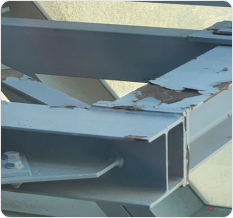
Coating Assessment and Evaluation
Colossal Consultants provides independent coating assessment and evaluation services for protective coating systems used on pipelines, tanks, process equipment, structural steel, offshore facilities and other industrial assets. We assess coating condition, application quality, deterioration mechanisms, compatibility with the substrate and suitability for the operating environment. Our work combines field inspection, document review, targeted testing and engineering analysis to identify coating defects, determine probable causes of failure and recommend practical repair, rehabilitation or replacement measures.
Our Coating Assessment and Evaluation Approach
The assessment begins by defining the asset, coating system, service environment and reason for the evaluation. We review coating specifications, product data, application and repair records, surface-preparation requirements, inspection reports, operating history and known exposure to moisture, chemicals, ultraviolet radiation, temperature cycling or mechanical damage.
Field assessment is then used to document the location, extent and severity of coating deterioration. This may include visual condition mapping and evaluation of rusting, blistering, cracking, flaking, peeling, chalking, underfilm corrosion, impact damage and premature breakdown at edges, welds, supports and other vulnerable areas. Where appropriate, targeted measurements may include dry-film thickness, adhesion, holiday detection, surface contamination and environmental-condition checks.
The findings are interpreted to identify the most probable causes of deterioration. These may include inadequate surface preparation, poor application control, incorrect film thickness, coating incompatibility, contamination, unsuitable material selection, ageing or exposure beyond the coating system’s intended service limits. Coating defects are evaluated together with substrate condition so that visible damage is not treated as an isolated cosmetic issue.
The final recommendations may include local repair, partial rehabilitation or complete coating replacement, together with suitable surface-preparation requirements, coating-system considerations and application quality-control measures. This service focuses specifically on the condition and performance of the protective coating system. Where deterioration is linked to CUI, MIC, cathodic protection performance or wider corrosion-management issues, those mechanisms are addressed through the relevant specialist assessment rather than being treated as coating failure alone.
Coating Assessment Priorities and Practical Deliverables
The completed assessment converts coating specifications, application records, field observations, inspection measurements and substrate-condition evidence into a practical coating-management decision. It identifies the extent and severity of deterioration, the probable causes of failure, locations requiring priority attention and whether local repair, partial rehabilitation or complete recoating is appropriate.
Typical deliverables may include:
- Defined assessment scope, asset register and coating-system inventory
- Review of coating specifications, product data, application records, previous repairs and inspection history
- Documentation of service environment, chemical exposure, temperature, ultraviolet exposure, moisture and mechanical damage
- Visual condition survey and mapping of rusting, blistering, cracking, peeling, flaking, chalking, impact damage and underfilm corrosion
- Identification of deterioration at welds, edges, bolts, supports, crevices, damaged areas and other vulnerable locations
- Coating-condition grading and priority ranking based on severity, extent and consequence of further deterioration
- Dry-film-thickness measurements and evaluation against the specified coating system, where appropriate
- Adhesion, holiday detection, surface contamination or other targeted testing where technically justified
- Assessment of exposed substrate condition and the extent of corrosion beneath damaged coating
- Evaluation of probable causes, including inadequate surface preparation, application defects, incorrect film thickness, incompatibility, ageing and unsuitable service exposure
- Recommendations for local repair, partial rehabilitation or complete coating replacement
- Recommended surface-preparation requirements and coating-system considerations for the intended operating environment
- Application quality-control requirements, inspection stages, hold points and acceptance considerations
- Photographic records, defect maps, measurement summaries and prioritised corrective-action recommendations
- Clearly stated data gaps, limitations and requirements for further laboratory analysis or specialist testing
- Coordination recommendations where deterioration requires separate CUI, MIC, cathodic-protection, failure-analysis or general corrosion-testing work
Material & Corrosion
- Failure Analysis and Root Cause Investigation
- Material Selection and Corrosion Engineering
- Corrosion Risk Assessment Study – CRAS
- Corrosion Management and Monitoring
- Corrosion Under Insulation Assessment and Management
- Microbiologically Influenced Corrosion Assessment and Control
- Coating Assessment and Evaluation
- Cathodic Protection
- Corrosivity and Corrosion Testing
Coating Assessment and Evaluation FAQs
A coating assessment typically includes review of the coating specification and application history, visual condition surveying, defect mapping and evaluation of the substrate beneath damaged areas. Depending on the condition and project objectives, it may also include dry-film-thickness measurements, adhesion testing, holiday detection, surface-contamination checks and other targeted examinations.
The assessment can evaluate rusting, blistering, cracking, peeling, flaking, chalking, underfilm corrosion, impact damage, pinholes, holidays and premature deterioration at welds, edges, bolts, supports and other vulnerable locations. The extent and severity of each defect are documented so that repair priorities can be established.
The probable cause is determined by considering the defect pattern, substrate condition, coating thickness, adhesion, surface preparation, application records and actual service exposure. Possible causes include poor surface preparation, contamination, incorrect film thickness, incompatible coating layers, application defects, ageing or operating conditions beyond the coating system’s intended limits.
How is coating assessment different from CUI, MIC, cathodic protection or general corrosion testing?
Coating assessment focuses on the condition, application quality and protective performance of the coating system. CUI investigates corrosion beneath insulation, MIC evaluates credible microbial contributions, cathodic-protection assessment evaluates electrochemical protection systems, and general corrosion testing provides broader material or environmental test data. Separate specialist assessments may be recommended when more than one mechanism is involved.
Recommendations may include local repair, partial rehabilitation or complete coating replacement, together with suitable surface-preparation requirements and coating-system considerations. The report may also define application controls, inspection stages, hold points, acceptance requirements, monitoring priorities and any need for further laboratory or specialist examination.