
API 579 Fitness-for-Service & Remaining-Life Assessment in the UAE
Assess corrosion, cracking, thinning, dents and other damage to determine whether pressure equipment, piping and tanks can continue operating safely—and for how long.
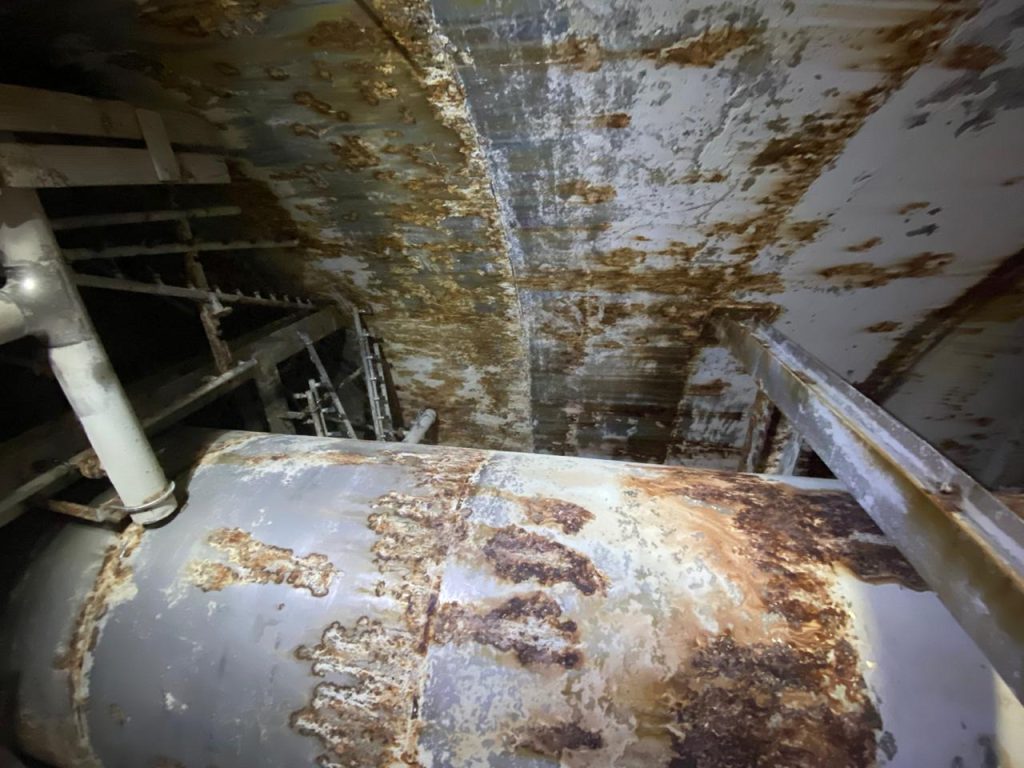
Fitness-for-Service Decisions for Damaged Equipment
Damage such as corrosion, local metal loss, cracking, dents, deformation or fabrication defects does not automatically mean that equipment must be removed from service. A fitness-for-service assessment determines whether the equipment can continue operating safely under its actual loading, material condition and service environment.
Colossal Consultants applies engineering assessment principles based on API 579-1/ASME FFS-1 to evaluate the severity of detected damage, establish acceptance criteria and support decisions on continued operation, repair, rerating, monitoring or replacement.
How We Assess Fitness-for-Service
- Define the equipment, design conditions, operating history and location of the damage.
- Review and validate inspection measurements, drawings, material data and previous repairs.
- Identify the active damage mechanism and select the appropriate API 579-1/ASME FFS-1 assessment procedure.
- Calculate remaining strength, allowable operating limits or acceptable flaw dimensions.
- Evaluate future damage growth, inspection intervals and remaining service life where required.
- Recommend continued operation, monitoring, repair, rerating or replacement.
Damage Mechanisms and Conditions We Assess
Depending on the equipment and available inspection data, the assessment may address:
- General and local metal loss
- Pitting corrosion
- Crack-like flaws and weld defects
- Dents, gouges and geometric distortion
- Laminations, blisters and hydrogen-related damage
- Fire damage and other process excursions
- High-temperature creep and remaining-life concerns
- Fatigue and cyclic-service damage
Assessment Levels and Engineering Deliverables
The required assessment level depends on the damage severity, available data and consequence of failure. Screening-level evaluations may be sufficient for straightforward cases, while more detailed assessments can include refined stress calculations, material properties, finite-element analysis and damage-growth modelling.
Typical deliverables include:
- Assessment basis, assumptions and inspection-data review
- Applicable API 579 assessment level and acceptance criteria
- Remaining-strength or allowable-operating-condition calculations
- Remaining-life and future-damage-growth conclusions where applicable
- Required inspection intervals and monitoring recommendations
- Repair, rerating, continued-operation or replacement recommendations
Equipment We Commonly Assess
Fitness-for-service and remaining-life assessments can be applied to a wide range of fixed equipment and pressure-containing assets, including:
- Pressure vessels and process columns
- Process piping and high-energy piping
- Storage tanks
- Fired heaters and reformers
- Heat exchangers and headers
- Pipelines
- Coke drums and flare drums
- Nozzles, attachments and other critical equipment components
- Other ageing or damaged assets in oil, gas, petrochemical, power and process facilities
Where required, the assessment can be supported by related inspection and integrity services, including:
- API 510 pressure-vessel inspection
- API 570 piping inspection
- API 580/581 risk-based inspection
- API 653 above-ground storage-tank inspection
- API 936 refractory inspection and quality control
- Materials, corrosion and laboratory investigation
Fitness-for-Service FAQs
What is a fitness-for-service assessment?
A fitness-for-service assessment is an engineering evaluation used to determine whether equipment containing damage or deterioration can continue operating safely. The assessment considers the actual damage, material properties, operating loads, service conditions and applicable acceptance criteria.
When is an API 579 assessment required?
An API 579-1/ASME FFS-1 assessment may be required when inspection identifies metal loss, pitting, cracking, dents, deformation, fire damage, hydrogen-related damage, creep or other conditions that could affect structural integrity or continued operation.
What inspection data is needed?
The required data depends on the damage mechanism and assessment level. Typical information includes equipment drawings, material specifications, design and operating conditions, thickness measurements, flaw dimensions, inspection reports, photographs, previous repairs and relevant operating history.
What decisions can the assessment support?
The assessment can support decisions on continued operation, reduced operating limits, rerating, repair, monitoring, inspection intervals or replacement. The final recommendation depends on the calculated acceptance criteria and expected future damage progression.
Can the assessment determine remaining life?
Where sufficient information is available, the assessment can estimate remaining life by considering current damage, future deterioration rates, operating conditions and applicable failure criteria. The result may also be used to define inspection and monitoring intervals.