
Reliability, Availability and Maintainability (RAM) Studies in the UAE
Model asset performance, identify production bottlenecks and optimise maintenance strategies to improve uptime, production availability and lifecycle performance.
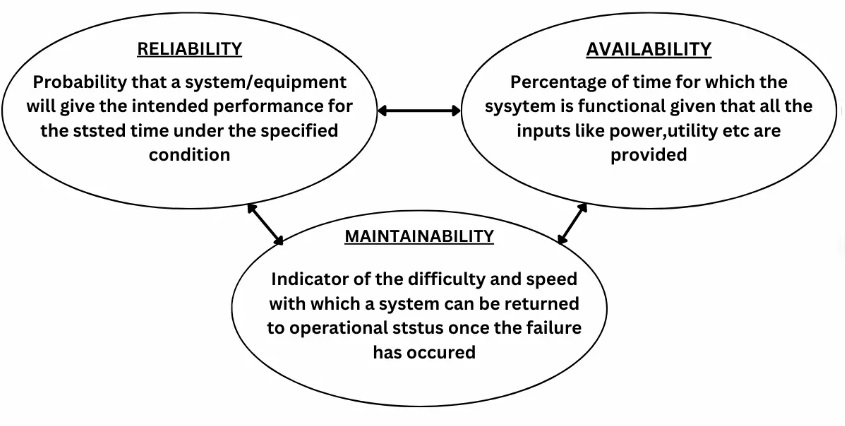
RAM Studies for Reliable and Available Asset Performance
A Reliability, Availability and Maintainability study evaluates how an asset, system or production facility is expected to perform throughout its operating life. The study combines equipment reliability data, system configuration, maintenance assumptions and operational constraints to estimate production availability and identify the factors most likely to cause downtime.
Colossal Consultants develops RAM models for oil and gas, petrochemical, power and industrial facilities in the UAE and internationally. The results support design optimisation, equipment-selection decisions, maintenance planning, spare-parts strategies and practical improvements to plant uptime and lifecycle performance.
How We Conduct RAM Studies
- Define the system boundaries, operating philosophy and required performance targets.
- Review process flow diagrams, equipment lists, operating modes and redundancy arrangements.
- Compile and validate failure-rate, repair-time and maintenance data.
- Develop a reliability block diagram or equivalent system-performance model.
- Simulate equipment failures, repairs, planned maintenance and operational constraints.
- Identify availability losses, critical equipment, production bottlenecks and improvement opportunities.
- Compare design or maintenance alternatives and recommend the most effective actions.
Inputs and Data Used in RAM Modelling
The RAM model is developed using available design, operational and maintenance information. Typical inputs include:
- Process flow diagrams and system operating philosophy
- Equipment lists, capacities and duty requirements
- Operating modes, standby arrangements and redundancy configuration
- Equipment failure rates and failure-mode information
- Mean time to repair and maintenance-duration assumptions
- Planned maintenance, inspection and turnaround schedules
- Spare-parts availability and repair-logistics constraints
- Utility, storage and production-capacity limitations
- Historical operating, shutdown and maintenance records where available
RAM Modelling Outputs and Engineering Deliverables
The required level of modelling depends on the project stage, system complexity, available reliability data and the decisions the study must support. RAM studies may range from early design comparisons to detailed simulations of an operating facility.
Typical deliverables include:
- RAM study basis, assumptions and system boundaries
- Reliability block diagram and documented model architecture
- Predicted system availability and production availability
- Expected downtime and production-loss estimates
- Ranking of critical equipment and major availability-loss contributors
- Identification of single-point failures and system bottlenecks
- Sensitivity analysis for reliability, repair-time and maintenance assumptions
- Comparison of redundancy, equipment and maintenance alternatives
- Prioritised recommendations for improving uptime and lifecycle performance
Systems and Facilities We Commonly Model
RAM studies can be applied to complete facilities, production systems and individual equipment trains, including:
- Oil and gas production and processing facilities
- Gas treatment, compression and export systems
- Refineries and petrochemical plants
- LNG, LPG and terminal facilities
- Offshore platforms and associated production systems
- Pipelines, pumping stations and storage terminals
- Power-generation and utility systems
- Water-treatment and injection systems
- Rotating-equipment trains, compressors, pumps and turbines
- Critical electrical, instrumentation and control systems
RAM modelling provides quantitative evidence for decisions throughout the asset lifecycle. The study can support:
- Concept-selection and feasibility studies
- FEED and detailed-design optimisation
- Selection of equipment capacity and redundancy philosophy
- Evaluation of standby equipment and sparing arrangements
- Identification of single-point failures and production bottlenecks
- Maintenance and inspection-strategy development
- Spare-parts and repair-logistics planning
- Turnaround and planned-maintenance optimisation
- Debottlenecking and operational-improvement studies
- Comparison of modification or upgrade alternatives
RAM Studies FAQs
What is a RAM study?
A Reliability, Availability and Maintainability study is a quantitative assessment of how reliably a system is expected to operate, how much production or operating time it can achieve, and how quickly failed equipment can be restored. It combines equipment reliability, repair, maintenance and system-configuration data in a performance model.
When should a RAM study be carried out?
RAM studies are commonly performed during concept selection, FEED and detailed design, before major modifications, and when an operating facility has recurring downtime or production losses. Early studies help compare design options, while later studies support maintenance, sparing and debottlenecking decisions.
What information is required for RAM modelling?
Typical inputs include process flow diagrams, equipment lists, operating modes, redundancy arrangements, equipment failure rates, repair times, planned-maintenance schedules, spare-parts assumptions and historical shutdown or maintenance records where available.
What results does a RAM study provide?
A RAM study can estimate system availability, production availability, expected downtime and production losses. It also identifies critical equipment, single-point failures, system bottlenecks and the assumptions that have the greatest effect on performance.
Can RAM modelling compare design and maintenance alternatives?
Yes. Alternative equipment capacities, redundancy arrangements, standby philosophies, repair times, maintenance intervals and spare-parts strategies can be modelled and compared. This allows improvement options to be ranked according to their expected effect on uptime and lifecycle performance.