
HAZOP, QRA, SIL & BRA Process Safety Services in the UAE
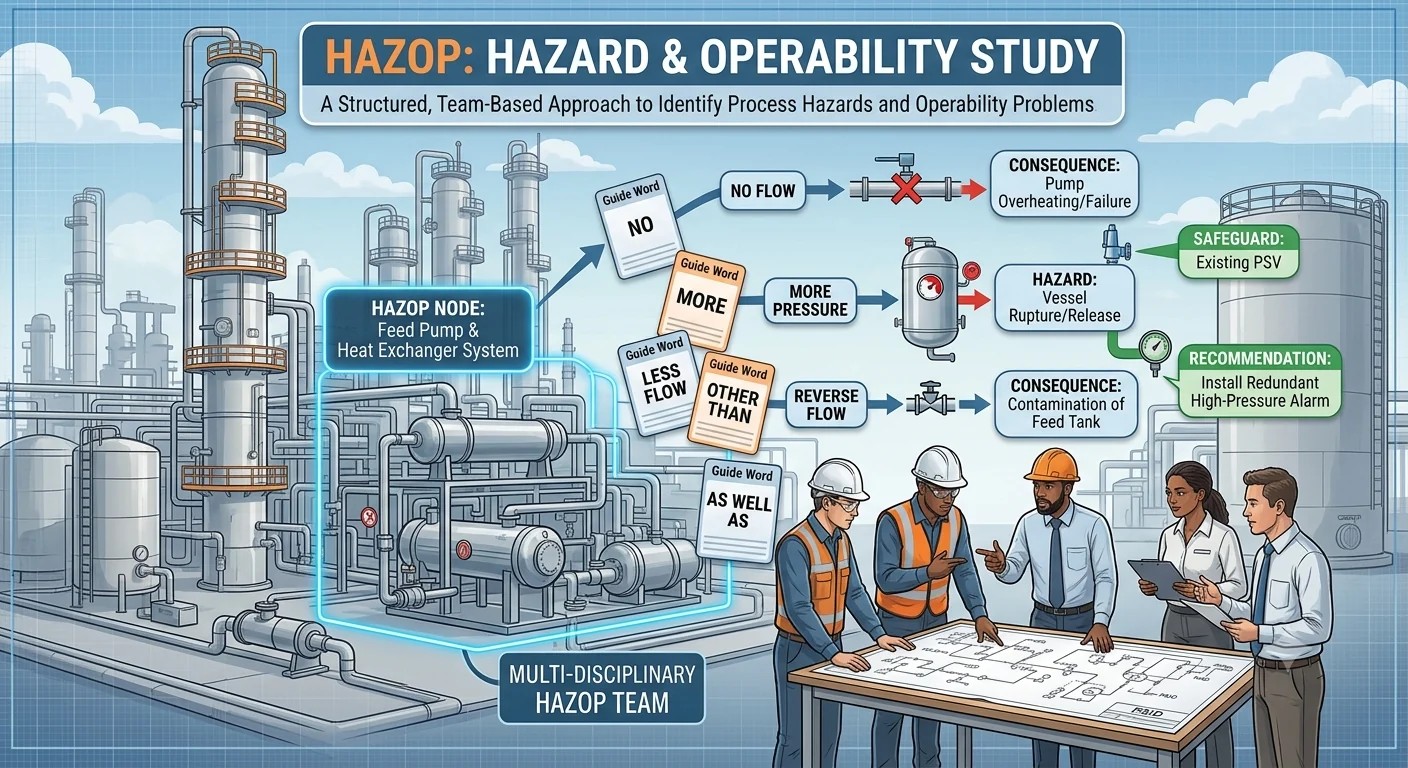
Integrated Process Safety Studies for Safer, Defensible Decisions
Colossal Consultants provides independent HAZOP, QRA, SIL and Building Risk Assessment services to identify process hazards, quantify risk, define required safeguards and support safer design and operation across oil and gas, petrochemical, chemical, pharmaceutical and industrial facilities.
Our HAZOP, QRA, SIL & BRA Study Approach
A typical engagement begins with a review of process descriptions, PFDs, P&IDs, plot plans, operating philosophies, cause-and-effect charts, safety requirements, incident history and applicable client standards. We then define the study scope, nodes, scenarios and required risk criteria with the project team.
Depending on the assignment, the work may include facilitated HAZOP workshops, consequence modelling, frequency estimation, individual and societal risk assessment, SIL determination and verification, occupied-building risk assessment, safeguard review and recommendations for risk reduction.
Findings are documented in clear action registers and technical reports that distinguish credible hazards, existing safeguards, residual risk and the measures required to support design approval, safe operation and regulatory or client review.
Clear Deliverables and Practical Risk-Reduction Actions
The final deliverables provide a structured record of the hazards assessed, assumptions used, existing safeguards, risk results, recommended actions and responsibilities for close-out.
Deliverables may include:
- HAZOP worksheets, recommendations and action register
- QRA consequence, frequency and risk-assessment results
- Individual and societal risk findings and risk contours, where applicable
- SIL determination or verification reports and safety-function recommendations
- Building Risk Assessment findings for occupied facilities
- Review of safeguards and additional risk-reduction measures
- Prioritised actions to support design, operations and compliance
Health, Safety & Environment Services
HAZOP, QRA, SIL & BRA FAQs
What information is required to begin a HAZOP study?
A HAZOP study normally requires current PFDs, P&IDs, process descriptions, operating and control philosophies, equipment data, cause-and-effect charts, relief-system information and relevant design or operating standards. The exact document list is confirmed during the study kick-off.
What is the difference between HAZOP and QRA?
A HAZOP workshop systematically identifies process deviations, causes, consequences and safeguards. A Quantitative Risk Assessment uses consequence and frequency analysis to estimate individual and societal risk and determine whether additional risk-reduction measures are required.
When is a SIL study required?
A SIL study is typically required when instrumented safeguards are needed to reduce process risk. SIL determination establishes the required risk-reduction level for each Safety Instrumented Function, while SIL verification checks whether the proposed design achieves that target.
What does a Building Risk Assessment evaluate?
A Building Risk Assessment evaluates risks to personnel in occupied buildings from hazards such as explosion, fire and toxic releases. It helps determine whether building location, design, occupancy controls or additional protective measures are required.
Can these studies be completed for existing operating facilities?
Yes. HAZOP, QRA, SIL and BRA studies can support new designs, modifications and existing facilities. For operating assets, the review can incorporate current operating conditions, incident history, safeguards, occupancy and proposed changes.