Laboratory Information Management System (LIMS)
Laboratory Information Management System (LIMS) Solutions
Colossal Consultants helps laboratories plan, configure and implement Laboratory Information Management System (LIMS) solutions that improve sample traceability, workflow control and access to reliable laboratory data. Our services are designed for organisations seeking to replace manual records, connect laboratory activities across teams or strengthen the management of samples, methods, results and approvals.
We support the full implementation lifecycle, from requirements definition and process mapping to system configuration, data migration, testing, training and post-deployment support. The solution is aligned with the laboratory’s operating model, quality procedures and reporting needs, helping users manage work more consistently while maintaining clear audit trails and controlled access to information.
What Our LIMS Services Cover
Our LIMS consulting and implementation services can be tailored to a single laboratory, a multi-site operation or a phased laboratory digitalisation programme. Depending on the agreed project scope, our support can include:
- Requirements gathering and gap analysis
- Laboratory workflow mapping and process design
- LIMS configuration and master-data setup
- Sample registration, chain-of-custody and status tracking
- Test method, specification and result management
- Instrument and external-system integration planning
- Data migration, validation and user acceptance testing
- Dashboard, reporting and role-based access configuration
- User training, go-live assistance and continuous improvement support
A Structured LIMS Implementation Approach
Discovery and Requirements Definition
We begin by reviewing laboratory processes, current records, reporting obligations, user roles and existing systems. This establishes the functional, technical and quality requirements that the LIMS solution must satisfy.
Workflow Design and System Configuration
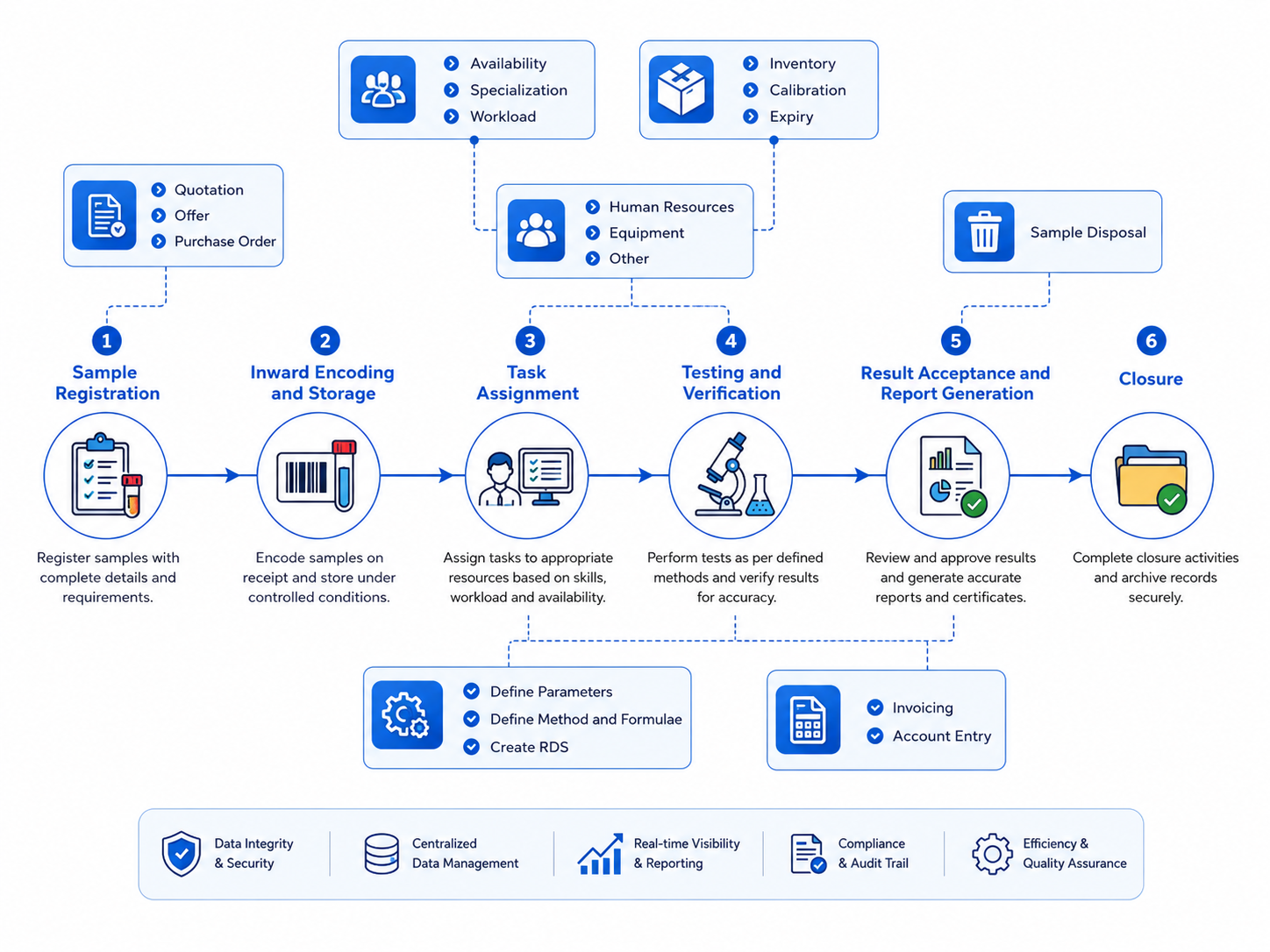
Laboratory workflows are mapped into controlled digital processes covering sample receipt, task assignment, testing, review, approval, reporting and closure. Master data, user permissions, dashboards and notifications are configured around the approved operating model.
Data Migration, Testing and Validation
Existing laboratory data can be assessed, cleaned and prepared for migration. Configuration testing and user acceptance testing are then completed against agreed scenarios so that issues are identified before go-live.
Training, Deployment and Improvement
Users receive role-appropriate training before deployment. Following go-live, we can support issue resolution, workflow refinement, reporting improvements and future integrations as laboratory requirements evolve.
Business Benefits of an Effective LIMS
A properly implemented LIMS provides more than electronic recordkeeping. It creates a controlled information environment that helps laboratory teams work consistently, locate information quickly and manage operational and quality risks more effectively.
Key outcomes may include:
- Improved sample traceability and chain-of-custody control
- Faster access to current test status and laboratory workload
- Reduced manual transcription and duplicate data entry
- More consistent application of methods, specifications and approvals
- Clearer audit trails and accountability
- Controlled reporting and release of laboratory results
- Better visibility across multiple laboratories or operating locations
- A scalable foundation for future laboratory automation and integration
Frequently Asked Questions
A Laboratory Information Management System is a digital platform used to manage laboratory samples, workflows, test information, results, approvals and reporting. It helps replace fragmented spreadsheets and manual records with controlled processes, searchable information and clearer audit trails.
A LIMS can support processes such as sample registration, chain of custody, task assignment, test method selection, specification management, result entry, technical review, approval, reporting and sample closure. The exact functions depend on the laboratory’s operating model and implementation scope.
Yes. Depending on the selected platform and available interfaces, a LIMS may be integrated with laboratory instruments, enterprise systems, document-management platforms, reporting tools and other data sources. Integration requirements should be defined and tested as part of the implementation plan.
A typical project includes requirements gathering, laboratory workflow mapping, system configuration, master-data preparation, data migration, testing, user acceptance, training and go-live support. The implementation approach should be based on approved laboratory procedures, user roles and reporting needs.
Yes. Colossal Consultants can review an existing LIMS environment, identify workflow or configuration gaps and support improvements, migration planning, system replacement or expansion to additional laboratories. The recommended approach will depend on the current platform, available data and required future functionality.